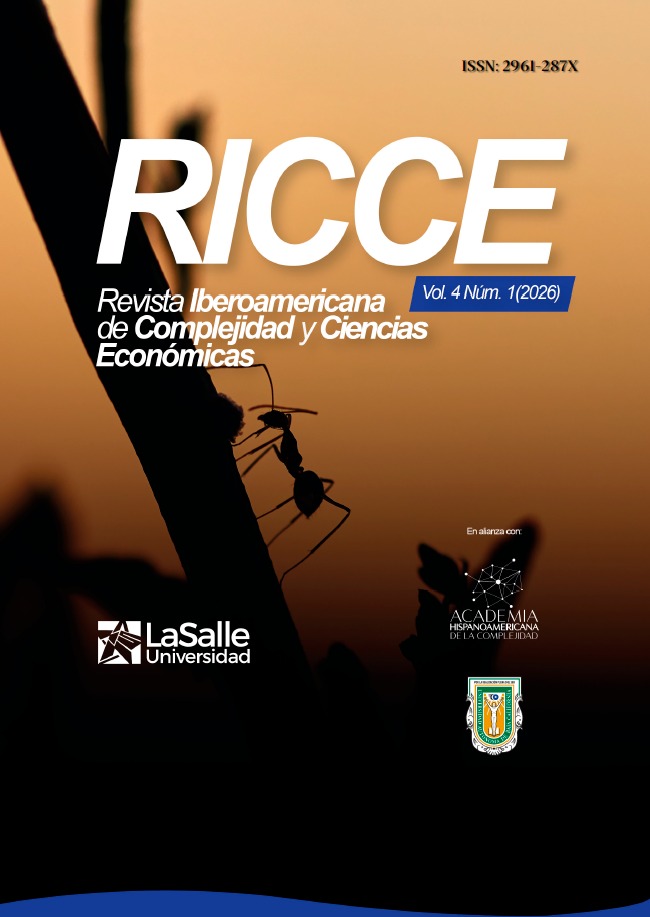
IS HUMAN SOCIETY BECOMING MORE LIKE THAT OF INSECTS?

Abstract
The similarities between human societies and those of termites and ants are enormous: life cycles, castes, offspring care, intergenerational mixing, complex cities, armies, agriculture, communications, social memory, social order, and degradation. The great difference is the individuality inherent to humans, assisted by consciousness and intelligence, and by feelings. Everything insects do is determined by evolution and genetically determined. Humans evolve more through the ability to think and through intraspecific competition. Both societies dominated their environment and can therefore be considered successful. However, there are indications that modern, global human society is increasingly resembling those of termites and ants due to three factors: (i) the growing limitations on individuality, that is, the homogenization of society based on policies and laws, religion, education, advertising and propaganda, and especially the use of the internet; (ii) the growing limitations on intelligence due to the proliferation of the class or caste of the "dupes" or indifferent, non-participating individuals or silent majority, and (iii) the advent of artificial intelligence, which reduces the proportion of "intelligent" individuals in society and concentrates the capacity to think and create in the hands of a few. It is concluded that, although the capacity for abstraction, intelligence, and perhaps feelings will always be maintained in humans, their future societies will increasingly resemble those of social insects, where everyone obeys without question and no one complains.
Downloads
References
Arnold, C., Atchinson, J., & McKnight, A. (2021). Reciprocal relationships with trees: rekindling Indigenous wellbeing and identity through the Yuin ontology of oneness. Australian Geographer, 52(2), 131–147. https://doi.org/10.1080/00049182.2021.1910111
Baluska, F., Mancuso, S., & Volkmann, D. (Eds.). (2006). Communication in plants: Neuronal aspects of plant life. Springer Verlag.
Ball, P. (2023). How life works. A user’s guide to the new biology. Picador.
Bouchardon, P. (2021). Las energías sanadoras de los árboles. Blume.
Carroll, S. (2017). The big picture. On the origins of life, meaning and the universe itself. Dutton.
Carson, R. (2000). Silent spring. Penguin Books.
Cassirer, E. (199). Philosophie der symbolischen formen. Erster teil: Die sprache. Zweiter teil: Das mytische denken. Drittel teil: Phänemenologie der erkenntnis. Wissenschaftliche Buchgesellschaft.
Cinco proyectos de reforestación exitosa. (s.f.). https://arbolinvertido.com/ecologia/cinco-proyectos-de-reforestacion-exitosos-cambiaron-el-paisaje
De Waal, F. (1996). Good natured. The origins of right and wrong in humans and other animals. Harvard University Press.
Fernández-Armesto, F. (2002). Civilizations. Culture, ambition, and the transformation of nature. A Touchstone Book.
Gilligan, C. (2013). La ética del cuidado. Cuadernos de la Fundació Victor Grifols i Lucas, 30, 10–39. https://www.revistaseden.org/boletin/files/6964_etica_del_cuidado_2013.pdf
Godfrey-Smith, P. (2020). Metazoa. Animal life and the birth of the mind. Farrar, Straus and Giroux.
Goethe, J. W. von (2013). Teoría de la naturaleza. Tecnos.
Gombrich, E. H. (2008). La historia del arte. Phaidon.
Halle, F. (2020). La vida de los árboles. GG.
Heidegger, M. (1978). Vom wesen des Grundes. En Wegmarken. Vittorio Klostermann.
Heidegger, M. (1984). Was heisst denken? Max Niemeyer Verlag.
Hölldobler, B., & Wilson, E. O. (1996). Viaje a las hormigas. Una historia de exploración científica. Crítica-Grijalbo Mondadori.
Krause, B. (2013). The great animal orchestra. Finding the origins of music in the world’s wild places. Back Bay Books.
Maldonado, C. E. (2022). Decir lo inefable. Acerca de las relaciones entre ciencia y arte. Ed. Suratómica.
Mancuso, S. (2019). El increíble viaje de las plantas. Galaxia Gutenberg.
Mancuso, S., & Viola, A. (2015). Brilliant green. The surprising history and science of plant intelligence. Island Press.
Maturana, H., & Varela, F. (1900). El árbol del conocimiento. Las raíces biológicas del conocimiento humano. Editorial Debate.
Odum, E. P. (1997). Ecology. A bridge between science and society. Sinauer Associates, Inc. Publishers.
Prigogine, I., & Stengers, I. (2002). La nueva alianza. Metamorfosis de la ciencia. Alianza.
Scott, M. (2022). El libro del árbol. Relato, ciencia e historia de los árboles. Blume.
Shakespeare, W. (1967). Obras completas. Aguilar.
Sheldrake, M. (2020). Entangled life. How fungi make our worlds, change our minds & shape our futures. Random House.
Vallejo, C. (1980). Obra poética completa. Ed. La Oveja Negra.
Wangari, M. (2020). Plantar árboles, sembrar ideas. Aikara Books.
Wilson, E. O. (2012). The social conquest of earth. Liverlight Publishing Corporation.
Wohlleben, P. (2016). The hidden life of trees. What they feel, how they communicate. Greystone Books.
Wulf, A. (2020). La invención de la naturaleza. El nuevo mundo de Alexander von Humboldt. Taurus.
25 poemas sobre árboles. (s.f.). https://nelda.org.in/25-poems-about-trees-to-inspire-you-tree-poems
Copyright (c) 2026 Iberoamerican Journal of Complexity and Economics Sciences

This work is licensed under a Creative Commons Attribution-NonCommercial-NoDerivatives 4.0 International License.
The authors transfer exclusively the right to publish their article to the Iberoamerican Journal of Complexity and Economics Sciences, which may formally edit or modify the approved text to comply with its own editorial regulations and with universal grammatical standards, before its publication; Likewise, our journal may translate the approved manuscripts into as many languages as it deems necessary and disseminate them in various countries, always giving public recognition to the author or authors of the research.